
Why Magnetic Tiles Are the Best Screen-Free Pick for Family Game Night
You planned a cozy family game night. Then someone opened a tablet, someone else followed a phone notification, and twenty minutes later the table was quiet. If that scene sounds familiar, magnetic tiles might be the reset your family needs: open-ended, hands-on, and engaging enough to pull attention away from screens without a single argument.
In this guide, we break down why magnetic tile puzzles work so well for mixed-age families, how they quietly build STEM skills, and how to run a magnetic-tile game night that keeps everyone from preschoolers to parents genuinely involved.
Key Takeaways
- Reducing screen time improves children's sleep, attention, and behavior, and family game night is one of the easiest ways to replace it (HealthyChildren.org, AAP).
- Magnetic tiles combine building, magnets, and guided play prompts, so one set serves ages 3 through 10.
- Look for strong internal magnets, at least 100 pieces, a STEM-aligned play guide, and drop-tested ABS plastic.
- Structure the night around build challenges and cooperative goals rather than free play alone.
Why Does Family Game Night Need to Go Screen-Free?
In its family media guidance, the American Academy of Pediatrics recommends consistent limits on screen time and screen-free family routines, because reducing screens improves children's sleep, attention, and behavior (HealthyChildren.org, Family Life: Media, 2026). A fixed game night gives that limit a positive replacement instead of an empty rule.
The problem is not just how much screen time children get. It is what it replaces. Hands-on play invites negotiation, storytelling, and shared problem-solving. When four hands hold four tiles and one goal, the interaction looks completely different from four people watching four separate feeds.
There is also a practical reason parents miss: a screen-free activity removes the setup cost of arguing about devices. Once the routine sticks, the friction disappears. The game becomes the thing the family does on that night, and nobody negotiates a tablet before the first move.
What Makes Magnetic Tiles Different From Board Games?
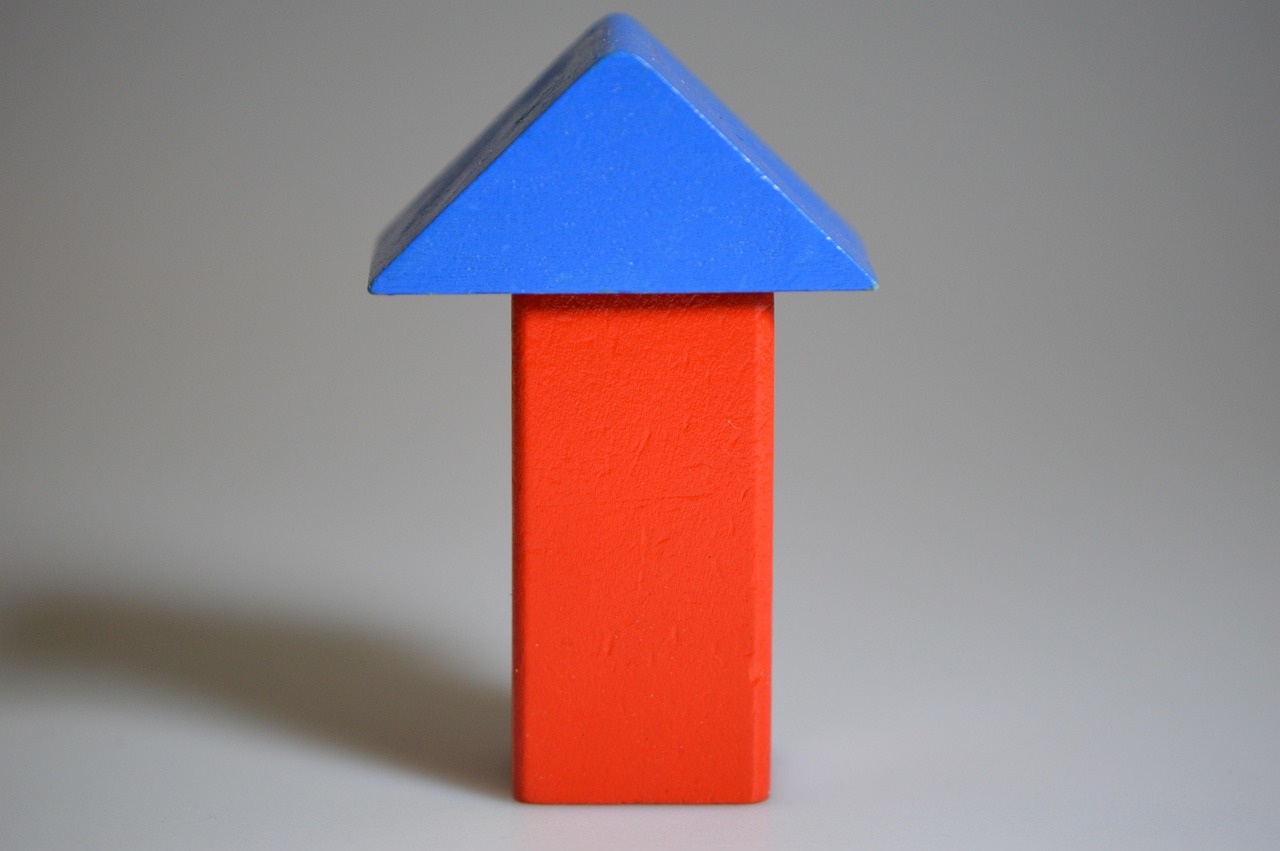
Board games usually have one path, fixed rules, and an age range on the box. Magnetic tile puzzles are the opposite: they click together with a satisfying snap, and the "game" is whatever the family decides to build that night. A well-made set supports that open play with a few concrete features.
- Strong internal magnets give a confident snap and structures that actually hold, so ambitious towers do not collapse at the first touch.
- A 100-piece set is enough for solo play or sibling collaboration, which matters when one child builds a castle and the other builds the road to it.
- A STEM-aligned play guide provides prompts that scale from easy shapes to advanced 3D challenges, so the set does not run out of ideas after week two.
- Drop-tested ABS plastic survives the build-and-topple cycle, because knocking things down is half the fun.
Compare that to a typical board game shelf. The game that works for a 5-year-old bores the 9-year-old; the game the 9-year-old loves is still a year away for the younger one. Tiles are the rare activity where a preschooler stacking squares and a fourth-grader engineering a bridge are both playing the same game at their own level, at the same table.
How Does Magnetic Tile Play Support STEM Skills?
Construction play trains spatial reasoning directly. A child who repeatedly rotates, aligns, and connects shapes practices the same mental rotation skills that later support geometry and early math. That is the quiet trade happening under every tower: the hands learn what the worksheet will one day try to explain.

Magnetic tiles add a second layer: magnetism itself. Polarity is a built-in physics lesson. When two tiles push apart instead of clicking together, a child learns, hands first, that magnets have poles. That moment sticks far better than a worksheet diagram.
Structure comes from the play guide. A STEM-aligned guide escalates from simple 2D shapes to 3D structures and open challenges, which keeps a growing child coming back. The play scales, so the toy does not get outgrown in a season.
How Do You Plan a Magnetic Tile Family Game Night?

A good session needs about 45 minutes, a flat surface, and light structure. Free play alone fades after 15 minutes with mixed ages; challenges keep the energy up. Here is a format that works.
Warm-up (10 minutes)
Everyone builds the same simple shape at the same time: a house, a rocket, a bridge. No winners. The goal is to get every hand on tiles quickly and let younger builders feel competent early.
Challenge round (20 minutes)
One person picks a prompt from the play guide, and everyone builds their own version in 10 minutes. Then each builder gets 30 seconds to present. Presentation matters most: it turns building into storytelling, and it gives quieter children a natural moment to speak.
Cooperative build (15 minutes)
The whole family builds one large structure together, with a rule that every person adds at least five tiles. Cooperation is where magnetic tiles outperform competitive games. Nobody loses, and the topple at the end is a shared event rather than a defeat.
Which Magnetic Tile Set Should You Choose?
Choose by build durability, piece count, and whether the set includes a play guide that scales. Magnets decide whether towers survive; the guide decides whether the set still comes out of the closet in month three. The StoreClaw Magnetic Tile Puzzle for Family Game Night is built around exactly those four features: strong internal magnets, a 100-piece set, a STEM-aligned play guide, and drop-tested ABS plastic.
| Variant | Set | Color | Price (USD) | Best for |
|---|---|---|---|---|
| Standard Set / Multicolor | Standard | Multicolor | $35.95 | First set, mixed ages |
| Standard Set / Pastel Mix | Standard | Pastel Mix | $41.34 | Calmer palette, gift-giving |
| Deluxe Set / Multicolor | Deluxe | Multicolor | $38.83 | More pieces for bigger builds |
| Deluxe Set / Pastel Mix | Deluxe | Pastel Mix | $43.86 | Largest set, frequent players |
Two practical notes. First, pick Multicolor for younger children: saturated colors make sorting and pattern games easier. Second, if two siblings will play simultaneously, start with the Deluxe set so the cooperative build phase has enough pieces to go around.
Frequently Asked Questions
What age range suits magnetic tile puzzles?
Sets with sealed internal magnets typically suit ages 3 and up, and play guides keep challenges fresh through about age 10. The prime window for spatial-reasoning benefits is roughly ages 3 to 8, with older siblings still engaged as challenge-setters for the cooperative builds.
Are the magnets safe for young children?
Yes, when magnets are sealed inside the tile casing rather than exposed. Sealed construction is the standard to look for, and the set here uses internal magnets enclosed in drop-tested ABS plastic. The U.S. CPSC warns that loose, high-powered magnet sets are a top ingestion hazard for young children, which is exactly why enclosed designs are the safer choice for households with toddlers.
How do we store 100 tiles without losing them?
Give the set one container with a lid and make cleanup part of the game night, not an afterthought. A 10-second "tile countdown" where everyone races to return tiles works well. Pieces used for one full cooperative build still fit in a single shoebox-sized bin, so storage stays manageable.
How do we clean the tiles?
Wipe with a damp cloth and mild soap, then dry before storing. Because the magnets are sealed, water does not reach them, and a quick wipe keeps surfaces grime-free after snack-adjacent play. Avoid submerging, since trapped moisture around tile edges can linger.
Can one set really work for different ages at once?
Yes, because the play guide escalates from 2D shapes to advanced 3D challenges, each child builds at their own level from the same box. The 100-piece count also supports split builds, so a 4-year-old and a 9-year-old can each have a project without splitting one shared set of pieces.
Conclusion
Magnetic tiles solve the two hardest problems of family game night at once: they hold attention without screens, and they flex across ages that few board games can bridge. Strong magnets make ambitious builds possible, a STEM-aligned guide keeps the play scaling upward, and drop-tested plastic means the set survives the topples that come with the fun.
Ready for your first screen-free game night?
The StoreClaw Magnetic Tile Puzzle for Family Game Night includes 100 pieces, strong internal magnets, and a STEM-aligned play guide. Standard and Deluxe sets are available in Multicolor and Pastel Mix.
From $35.95. Free from screens, full of snap.
Shop the Magnetic Tile Puzzle1. HealthyChildren.org (American Academy of Pediatrics) — "Family Life: Media", retrieved 2026-09-24, https://www.healthychildren.org/English/family-life/Media/Pages/default.aspx
2. U.S. Consumer Product Safety Commission — "Magnet Safety", retrieved 2026-09-24, https://www.cpsc.gov/Safety-Education/Safety-Guides/Magnets