
Magnetic Tiles for Family Game Night: Why Families Love the StoreClaw Puzzle Set
It starts the same way every week. You announce family game night, and within ten minutes someone is bored, someone is arguing over the rules, and a tablet has quietly appeared on the couch. If that sounds familiar, magnetic tiles might be the upgrade your game night needs — and our StoreClaw Magnetic Tile Puzzle for Family Game Night was built exactly for this moment.
Magnetic tiles are open-ended building toys: translucent shapes with safe magnets inside that click together into castles, rockets, rainbow domes, or whatever your family imagines. There are no rules to argue over and no single "right" way to play. In this guide, we'll cover why they work so well for families, how they support creativity and STEM learning, what ages they suit, and how to pick the right set from our collection.
- In 2016, the American Academy of Pediatrics recommended about one hour per day of high-quality media for preschoolers — magnetic tiles offer a screen-free alternative the whole family can share (AAP, 2016).
- Open-ended play with magnetic tiles builds creativity, spatial reasoning, and early engineering instincts without feeling like a lesson.
- The StoreClaw Magnetic Tile Puzzle comes in 4 variants (Standard or Deluxe × Multicolor or Pastel Mix), priced from $35.95 to $43.86 USD.
Why Do Magnetic Tiles Win at Family Game Night?
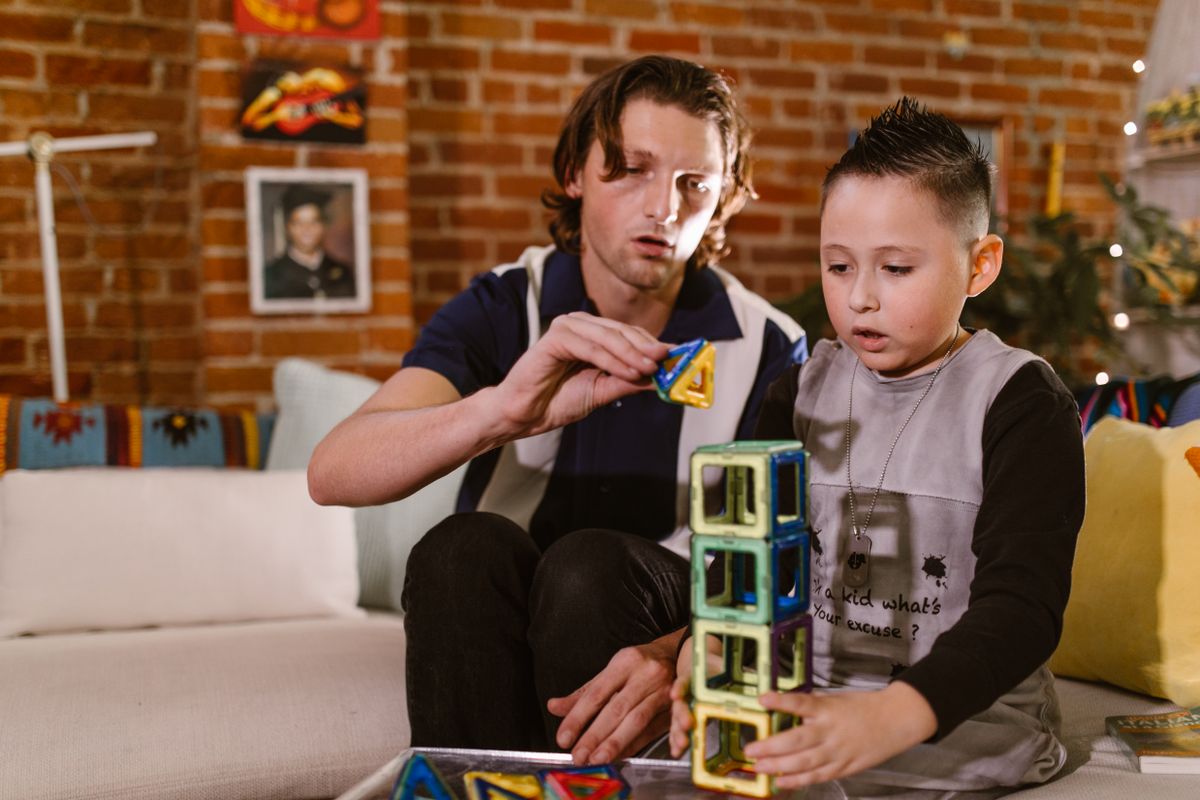
Magnetic tiles succeed where many board games fail because everyone can play at the same time, at their own level, in the same room. Preschoolers stack flat patterns; eight-year-olds engineer three-dimensional towers; parents happily join in because the pieces actually hold together. The satisfying click of two tiles snapping into place is a small reward loop that keeps hands and minds busy.
They also solve the screen-time struggle. In 2016, the American Academy of Pediatrics, in its policy statement "Media and Young Minds," recommended limiting preschoolers' non-educational screen use to about one hour per day (American Academy of Pediatrics, 2016). A shared building challenge fills that hour with conversation, negotiation, and laughter — the things game night is actually for.
How Does Open-Ended Play Spark Creativity and STEM Thinking?
Open-ended play means there is no single correct outcome — and that is precisely where creativity thrives. When a child picks up a triangle and a square, they are not following instructions; they are making a hundred small decisions about balance, symmetry, and structure. Educators call this construction play, and it is one of the most natural on-ramps to STEM thinking there is.
Magnetic tiles make geometry physical. A child who builds with triangles and squares internalizes how shapes combine into stronger structures far earlier than a worksheet could teach it. Add a light source underneath and the translucent pieces become a color-mixing lab. The StoreClaw set was designed around exactly this idea — part puzzle, part building set, all screen-free engagement for the whole family, according to the product page.
How Do Magnetic Tiles Grow With Your Child?
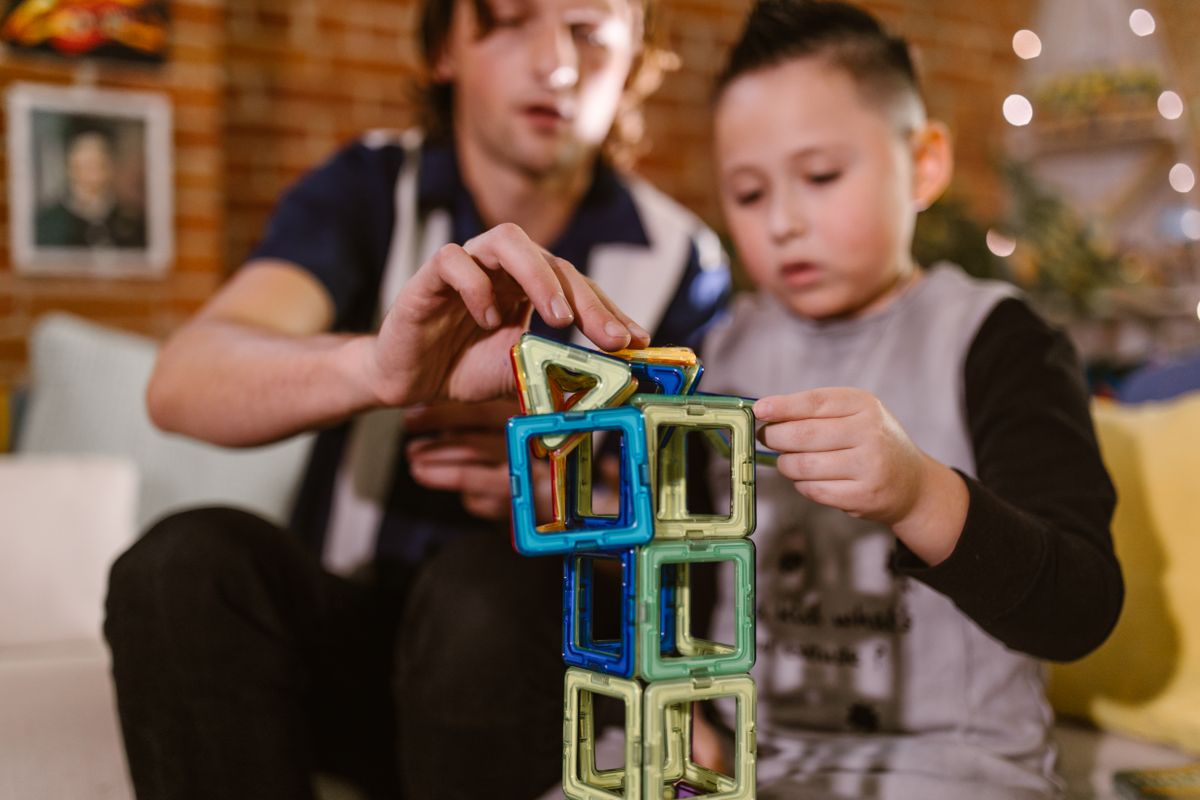
The best toy budget is the one you spend once. Magnetic tiles adapt to a child's development instead of being outgrown in a season. Here is how play typically evolves:
- Ages 3–4: flat patterns, color sorting, and simple fences. Fine motor practice disguised as fun, with strong magnetic connections that make building frustration-free for small hands.
- Ages 5–6: cubes, houses, and pyramids. Kids start predicting what will stand and what will topple — early physics by instinct.
- Ages 7–10: castles with working gates, bridges, geometric "stained glass" windows, and structured family challenges where everyone builds toward a shared goal.
Because the same tiles serve all three stages, siblings of different ages can genuinely play together — a rarity in the toy aisle and the single biggest reason magnetic tiles have become a family game night staple in so many homes.
Are Magnetic Tiles Safe for Young Children?
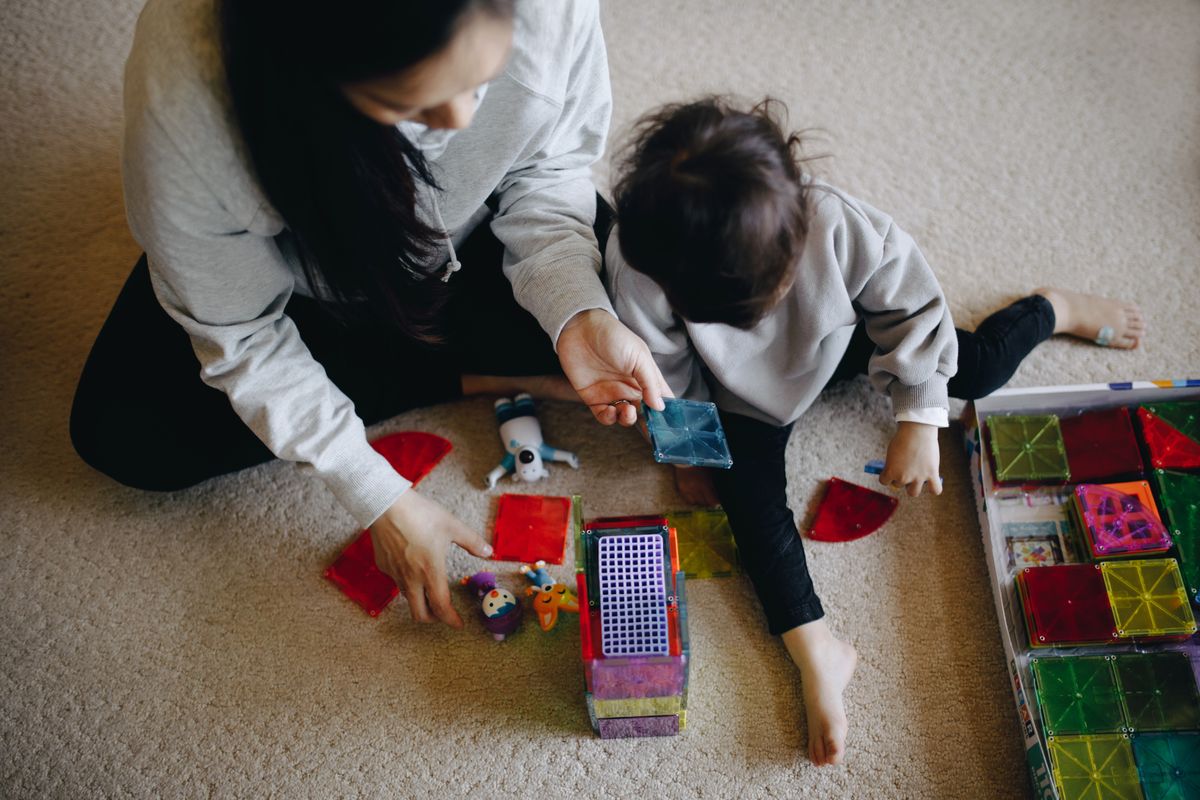
Safety is the first question every parent asks about magnetic toys, and it deserves a straight answer. The StoreClaw Magnetic Tile Puzzle is built with safe, rounded-edge pieces designed for small hands and big ideas, with the magnets enclosed inside the tile casing so they are not loose parts (StoreClaw product page, retrieved 2026-09-24).
A few common-sense practices keep play safe at any age: adult supervision for children under three, building on the floor or a low table so collapses are harmless, and a quick tile count at cleanup time so no stray piece is left where a toddler can find it. Follow those basics and magnetic tiles are among the calmest, safest open-ended toys available.
What Are 3 Family Game Night Challenges to Try Tonight?
Ready to put the set to work? These three challenges need nothing but tiles, a timer, and a sense of humor:
1. The Tower Test
Each player (or team) gets two minutes to build the tallest freestanding tower. Then everyone measures. Losers rebuild the winner's tower with a "renovation" — one decorative upgrade of their choosing. Kids love the power shift, and taller towers lead naturally into conversations about wide bases and stable shapes.
2. Copycat Build
One person builds a secret structure behind a book. They describe it out loud in 60 seconds without naming the shapes — "put a pointy piece on each side of the door frame" — while everyone else tries to copy it. It is part engineering, part listening game, and reliably hilarious.
3. Bridge the Gap
Place two stacks of books 20 centimeters apart and challenge the family to bridge the gap with tiles alone. When the first bridge collapses — and it will — that is not failure, that is the experiment. Iterate, adjust, celebrate. This is engineering in its purest, most joyful form.
Which StoreClaw Set Should You Choose: Standard vs. Deluxe?
The StoreClaw Magnetic Tile Puzzle comes in four variants, and the choice is simpler than it looks. Pick a size (Standard or Deluxe), then a palette (classic Multicolor or softer Pastel Mix). Current pricing and a comparison of what each choice suits:
| Variant | Price (USD) | Compare At | Best For |
|---|---|---|---|
| Standard Set / Multicolor | $35.95 | $42.92 | First magnetic tile set; bright, classic palette |
| Standard Set / Pastel Mix | $41.34 | $53.96 | Calmer playroom aesthetics; nursery-friendly tones |
| Deluxe Set / Multicolor | $38.83 | $50.91 | More pieces for bigger builds and group game nights |
| Deluxe Set / Pastel Mix | $43.86 | $52.29 | Largest set in the softer palette — the gift choice |
Practical guidance: families of three or four are usually delighted with a Standard set; if game night regularly includes cousins, neighbors, or a parent who "just fixes one thing" and stays for an hour, the Deluxe set pays for itself in fewer "we ran out of red tiles" disputes. Multicolor pops under a flashlight during glow builds; Pastel Mix photographs beautifully on the shelf. Whichever you choose, every variant shares the same rounded-edge safety design and strong magnetic connections.
Make this your family's next game night.
The StoreClaw Magnetic Tile Puzzle for Family Game Night — our best-selling toy set, from $35.95.
Frequently Asked Questions
What age are magnetic tiles best for?
Most magnetic tile sets, including the StoreClaw puzzle set, suit ages 3 and up, with supervised play recommended under 4. The AAP's 2016 guidance of about one hour of high-quality daily media for preschoolers (American Academy of Pediatrics, 2016) leaves plenty of room for hands-on building — and our set's rounded, toddler-friendly edges are designed for exactly that transition.
Are the magnets inside the tiles safe?
Yes. In the StoreClaw set, the magnets are enclosed inside each tile's casing, with rounded-edge pieces designed for small hands (product listing, retrieved 2026-09-24). Supervise children under three, build low to the ground, and do a tile count at cleanup — standard practice for any building toy with small parts.
How many tiles do I need for family game night?
The Standard Set comfortably supports two to three builders; the Deluxe Set suits four or more. Each variant runs $35.95–$43.86 USD (product listing, retrieved 2026-09-24), so upgrading to Deluxe typically costs less than adding a second Standard set later.
Do magnetic tiles really support STEM learning?
They do — through play rather than lessons. Building with shapes develops spatial reasoning, symmetry, and structural intuition, the foundations of early geometry and engineering. Educators call this construction play, and it is a documented pathway to STEM engagement long before formal schooling begins.
Conclusion: Build the Game Night You Actually Want
A great family game night needs three things: something everyone can do, nothing to argue about, and a reason to stay at the table. Magnetic tiles deliver all three:
- Open-ended play that includes every age in the room, from preschoolers to parents
- Zero rules disputes — the tiles simply click, and the fun is in what you build together
- Quiet, screen-free engagement backed by early-STEM benefits that grow with your child
The StoreClaw Magnetic Tile Puzzle for Family Game Night is our best-selling set for a reason: it turns an ordinary Tuesday evening into a construction site full of laughter. Pick your size, pick your palette, and let the first tower fall — the best game nights usually do.
1. American Academy of Pediatrics — "Media and Young Minds", Pediatrics, retrieved 2026-09-24, https://pediatrics.aappublications.org/content/138/5/e20162591
2. StoreClaw — "Magnetic Tile Puzzle for Family Game Night" product listing, retrieved 2026-09-24, https://vi11ac-kg.myshopify.com/products/family-game-night-magnetic-tile-puzzle