
Magnetic Tile Puzzles: The Family Game Night Upgrade That Beats Screen Time
Game night starts well. Then someone's tablet pings, a phone lights up, and half the table drifts away before round two. If that sounds familiar, you are not alone: in 2025, Pew Research Center reported that 42% of U.S. parents think they could do a better job managing their child's screen time, and the workaround most families reach for is a shared activity everyone actually wants to join.
That is exactly the gap a magnetic tile puzzle fills. It blends the free-form joy of building blocks with the focused satisfaction of solving a puzzle, and it works for a five-year-old and a forty-five-year-old at the same table. This guide breaks down why the format works, how to run a magnetic tile game night that sticks, and what to look for when you choose a set.
Key Takeaways
- Magnetic tiles combine two play modes, open building and puzzle challenges, in one kit, which keeps different ages engaged at the same table.
- Construction play is linked to stronger spatial and problem-solving skills in young children (Society for Research in Child Development, 2017).
- A successful game night needs a 30-45 minute window, a clear table, and one shared goal, not a stack of competing activities.
- Look for strong embedded magnets, rounded edges, and both guided challenge cards and open-play room when choosing a set.
Why Do Magnetic Tile Puzzles Keep the Whole Family Engaged?
In 2017, the Society for Research in Child Development published research showing that block building and puzzle play can improve children's spatial skills, which feed later math thinking. Magnetic tile puzzles hold attention because they switch between two modes: an open-ended building mode where anyone can create, and a puzzle mode with a defined challenge and a satisfying click when pieces snap into place.
The magic is in the range. A kindergartner stacks towers. A ten-year-old follows a challenge card. A parent gets quietly competitive about finishing the hardest pattern first. Nobody is waiting for a turn, because everyone builds at once.
There is a subtler reason families stay at the table longer: failure is fun. When a magnetic tower collapses, it clatters into a pile of bright pieces that invite an immediate rebuild. Compare that with a board game loss, which ends your evening. Retry loops keep kids, and honestly adults, coming back for one more round.
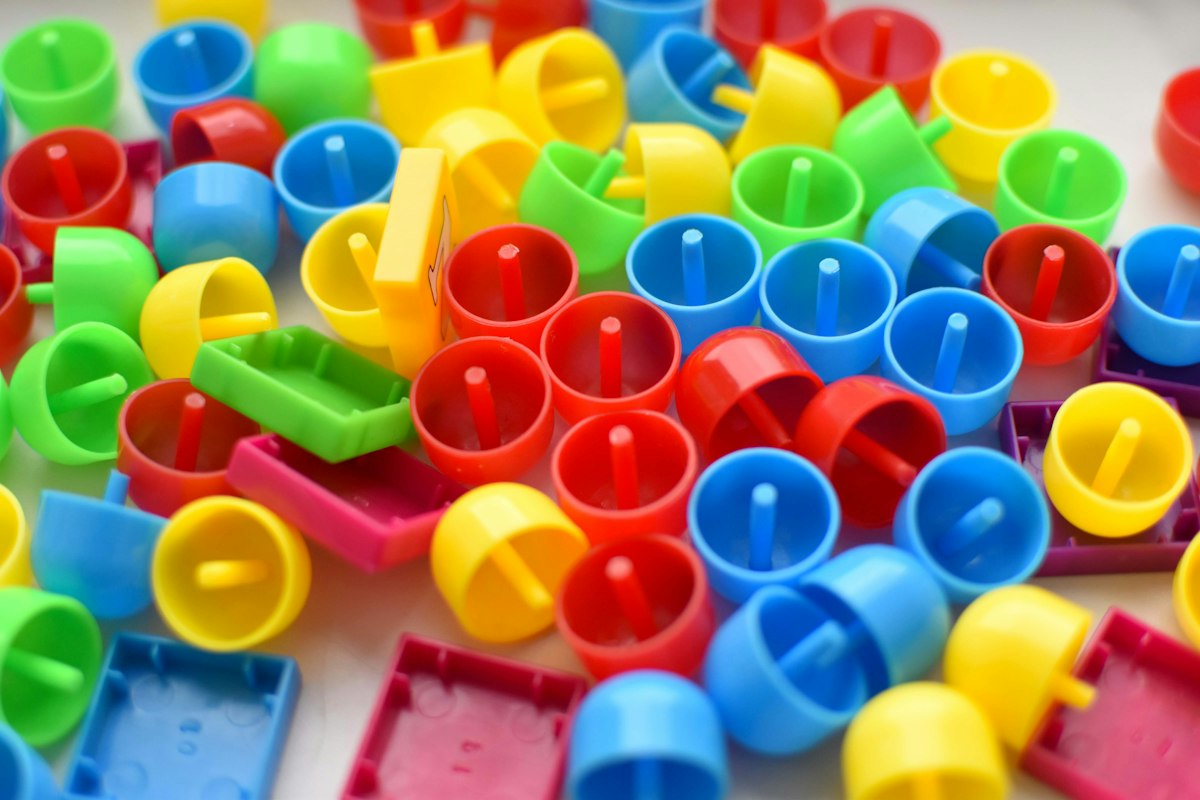
Magnetic Tiles vs. Board Games vs. Building Blocks: Which Wins for Family Night?
Each format earns its spot, but they serve different moods. Board games deliver rules, winners, and drama. Classic blocks deliver pure creativity. Magnetic tile puzzles sit in the middle: enough structure for a challenge, enough freedom for imagination, and no small pieces to lose under the couch. The right pick depends on your crew's age spread and how long you want the table calm to last.
| Format | Best for | Watch out for |
|---|---|---|
| Magnetic tile puzzle | Mixed ages, cooperative and solo play, ages 3 to adult | Needs a flat surface for stable builds |
| Board game | School-age kids and adults who enjoy rules and rivalry | Turn-taking can lose younger players fast |
| Classic building blocks | Toddlers and free-form creativity | Fewer built-in challenges for older kids |
Households that host a wide age range tend to get the most mileage from tiles. The same box serves a quiet solo challenge after school and a loud group build on Friday night.
How Do You Plan a Magnetic Tile Game Night That Actually Works?
A good game night is 30 to 45 minutes of protected time, and that boundary matters more than the activity itself. When the window is short and clear, kids treat it as an event; when it drifts, attention leaks to devices. Set the time, clear the table, and let the tiles do the rest.

Step 1: Pick a theme and one shared goal
Choose something concrete: a bridge that spans two books, the tallest tower that survives ten seconds, or a puzzle card everyone attacks together. One shared goal turns separate builders into a team.
Step 2: Run short, timed rounds
Ten-minute rounds keep energy high and give natural restart points. Use a kitchen timer rather than a phone, so no screen enters the circle.
Step 3: End with a gallery walk
Before cleanup, spend two minutes letting each builder show their creation. It closes the night on pride instead of a cleanup argument, and kids start planning next week's build on the spot.
How Do Different Ages Play With the Same Set?
The same tiles scale across a decade of development, which is rare in a toy aisle. Ages three to five focus on color sorting, stacking, and the satisfying snap of pieces joining. Ages six to nine chase challenge cards and reproduce 2D patterns into 3D shapes. Ten and up, including adults, lean into speed builds, symmetry challenges, and structural tricks like cantilevers.
For families, that range removes the classic game-night problem where the youngest player needs a partner and the oldest player is bored. Everyone holds the same pieces; only the goals differ.
Our Pick: StoreClaw Magnetic Tile Puzzle for Family Game Night
When a single kit has to carry a whole game night, the StoreClaw Magnetic Tile Puzzle for Family Game Night checks the boxes that matter. The tiles click together with embedded magnets for open-ended building, then snap into guided puzzle challenges, so one box covers both free play and structured rounds. The kit suits builders across the family spectrum, at $35.95 to $43.86 depending on the set configuration.
- Two play modes: free-form construction plus puzzle challenges in one kit.
- Safety-minded design: strong embedded magnets with safe rounded edges, per the product listing.
- Screen-free by design: the quiet competitor to tablets and TV on family night.
Ready to Upgrade Your Game Night?
One kit, two play modes, and a table full of people who forgot to check their phones.
Shop the StoreClaw Magnetic Tile PuzzleFrequently Asked Questions
What age is a magnetic tile puzzle good for?
Most magnetic tile sets suit ages 3 to adult, with parental supervision for the youngest builders. In 2017, the Society for Research in Child Development linked block building and puzzle play with stronger spatial skills in preschoolers, so early starts pay off. Older kids and adults shift to speed and symmetry challenges.
Are magnetic tiles safe for toddlers?
Quality sets embed the magnets fully inside sealed tiles with rounded edges, which is the design the StoreClaw kit lists. The U.S. Consumer Product Safety Commission continues to warn against loose, small magnets, so sealed construction is the feature to verify. Always check the manufacturer's stated age range before buying.
How many tiles do we need for family game night?
A starter kit of 60 to 100 tiles supports two to four builders comfortably; larger families should size up so no one waits for pieces. Timed round formats keep smaller sets feeling fresh, since builders reset every ten minutes. More tiles mainly enable bigger shared builds.
Do magnetic tiles actually reduce screen time?
They compete for the same attention slot without the arguments. Pew Research Center reported in 2025 that 42% of U.S. parents think they could do a better job managing their child's screen time, and shared hands-on play is the most recommended alternative. The two-mode format helps: there is always a next challenge to start.
Conclusion
A magnetic tile puzzle earns its shelf space by solving the real game-night problem: holding every age at one table, screen-free, long enough to matter. Pick a shared goal, run short timed rounds, and close with a gallery walk. The format does the rest.
If you want one kit to start with, the StoreClaw Magnetic Tile Puzzle for Family Game Night covers both open building and puzzle challenges from $35.95. Your table, your timer, and one box of clicking tiles are all a memorable night needs.
1. Pew Research Center — "How Parents Manage Screen Time for Kids," retrieved 2026-10-19, https://www.pewresearch.org/internet/2025/10/08/how-parents-approach-their-kids-screen-time/
2. Society for Research in Child Development — "Playing With Blocks May Help Children's Spatial and Math Thinking," retrieved 2026-10-19, https://www.srcd.org/news/playing-blocks-may-help-childrens-spatial-and-math-thinking