
Magnetic Tile Puzzle: The Family Game Night Upgrade That Beats Screen Time
Family game night deserves better than another round of the same board game, and another negotiation over tablets. In June 2025, a survey of 859 U.S. parents by Ann & Robert H. Lurie Children's Hospital of Chicago found that 81% of kids under 13 now have their own device. If your evenings feel like a tug-of-war between screens and togetherness, this guide is for you.
We will walk through why the magnetic tile puzzle has quietly become our store's best-selling family game, what the research says about screen-free play, and how to run a magnetic tile game night that keeps kids off screens and fully engaged. You will also get three ready-to-play game ideas and honest answers to the questions parents ask most.
- 81% of kids under 13 own a device, yet a 2025 review of 35 studies links free play to stronger creativity and emotional regulation.
- Spatial training works: a meta-analysis in Frontiers in Education found a moderate average effect size of g = 0.49 for improving spatial skills.
- Magnetic tiles combine puzzle, building set, and game night into one screen-free activity for ages 3 and up.
- Three ready-to-play game formats make one tile set feel like a different game every week.
Why Is Screen-Free Play So Hard to Protect?
In 2025, Lurie Children's Hospital surveyed 859 parents and found that 59% of children began using screens by age three, and 81% of kids under 13 had their own device (Lurie Children's Hospital, Screen Time Statistics 2025, 2025). The math is uncomfortable: devices are everywhere, and they compete directly with family time.
A 2026 review published by Curious Neuron examined 35 studies from 2020 to 2025 on children's play. It found children around age nine or ten can spend close to four hours per day on recreational screen use (Curious Neuron, Free Play vs Screen Time, 2026). That is four hours not spent inventing games, negotiating rules, or building something with their hands.
Here is the part most guides miss. The review's authors were careful: screen use is correlated with poorer sleep and lower physical activity, not proven to cause them. The real problem is what screens replace. Every hour of scrolling is an hour not spent in child-led, open-ended play, and that is the play researchers consistently link to creativity, emotional regulation, and social skills.
The practical takeaway is simple. You do not need to win the argument about devices. You need an activity engaging enough that nobody reaches for one. That is exactly the gap a magnetic tile puzzle fills.
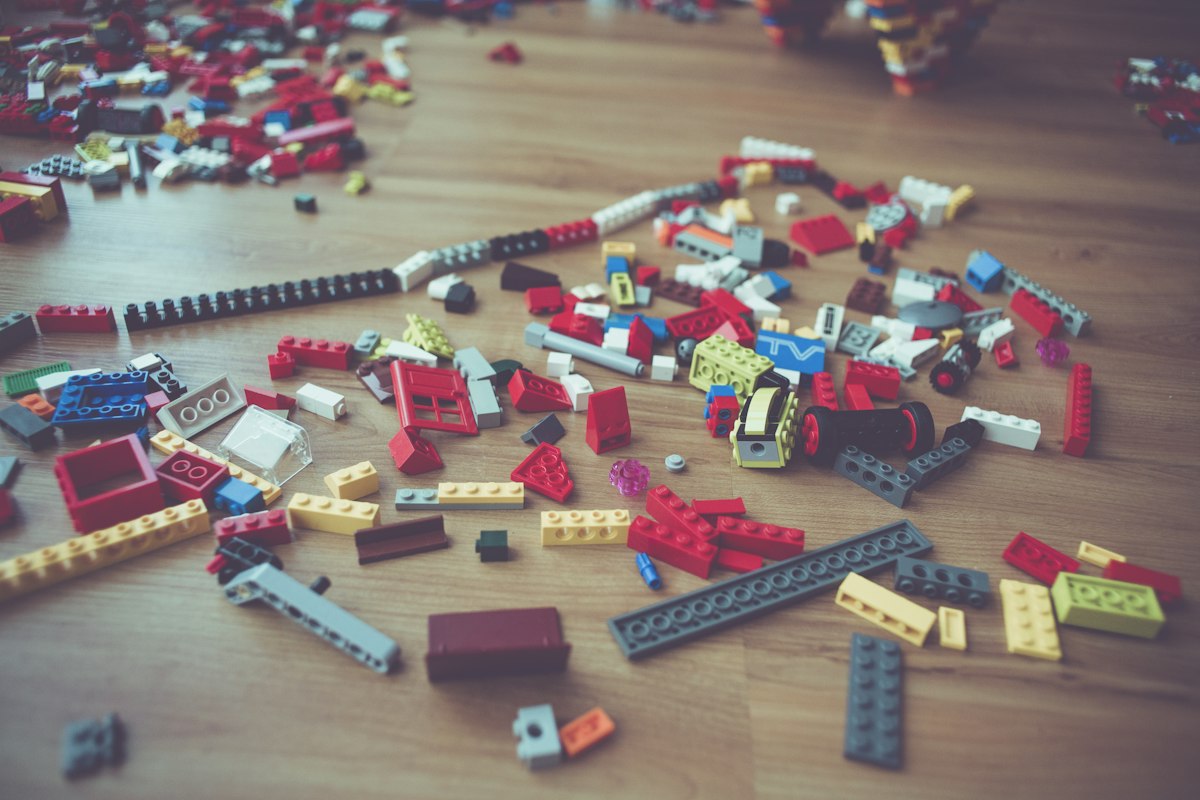
What Makes a Magnetic Tile Puzzle Different From Other Toys?
A magnetic tile puzzle is part puzzle, part building set, and part game board. Research on toy use published in PMC shows building toys stay developmentally relevant from roughly age one through twelve, evolving from soft blocks to robotic magnetic cubes (PMC, Children's Utilization of Toys, 2022). Few toy categories grow with a child that long.
The difference is the magnet. Traditional blocks punish a shaky hand; one bump and the tower falls. Magnetic tiles click together with a satisfying snap and hold their shape, so a four-year-old's ambitious design survives long enough to be finished. That single change turns frustration into momentum.
The second difference is open-endedness. A jigsaw puzzle has one right answer, and once it is solved, it is solved. Tiles have no ceiling. The same box becomes a castle today, a rainbow bridge tomorrow, and a marble run next week. That is why families keep them in rotation for years rather than weeks.
How Does Tile Play Build Real STEM Skills?
In 2023, a meta-analysis published in Frontiers in Education found that spatial training improves spatial skills with a moderate average effect size of Hedges's g = 0.49, and that the gains are durable and transferable (Frontiers in Education, Spatial Ability Development, 2023). Building with tiles is spatial training in disguise.
Every structure a child plans is an applied geometry lesson. Squares, triangles, and rectangles combine into cubes, pyramids, and bridges. Children absorb symmetry, balance, and structural engineering by instinct, without a worksheet in sight.
Writing in American Educator, researchers from Temple University and the University of Delaware note that about 80 percent of children's waking hours are spent outside school, so spatial skill development at home matters as much as classroom instruction (American Federation of Teachers, Spatial Thinking and STEM, 2018). Family game night is not just fun. It is one of the highest-leverage learning windows you have.
When families ask whether tiles are "really educational" or just a trend, we point to the pattern in our own store data. The magnetic tile puzzle has been our best-selling family game over the past quarter, and its reviews consistently mention the same thing: kids return to it voluntarily, week after week. No worksheet can claim that retention rate.
How Do You Run a Magnetic Tile Game Night?
Game night works when the rules are simple and the stakes are friendly. Constructive play research notes that children choose constructive play in more than half of free play periods, so a building-centered format matches how kids already want to play (Superspace, Constructive Play, 2024). Here is a ready-to-run plan for a Friday evening.
- Set the stage (5 minutes). Clear the table, dump the tiles in the middle, and let everyone sort pieces by color or shape. Sorting warms up young players and settles the energy.
- Round one: Speed Build (10 minutes). Call out a challenge word like "tower," "animal," or "bridge." Everyone builds for five minutes, then takes a one-sentence turn explaining their creation.
- Round two: Copy Cat (10 minutes). One player builds a hidden structure behind a book stand; the others race to rebuild it from a ten-second peek. Swap builders each round.
- Round three: Co-op Mega Build (15 minutes). Everyone works on one giant structure together. No winner, just a family photo before it comes down.
Keep total play time to about 45 minutes for younger children and let older kids extend the cooperative round. The goal is a shared experience good enough that the tablets stay in the drawer.
What Should Parents Look For in a Magnetic Tile Set?
Safety and build quality come first, and the difference shows up in the details. When you compare sets, focus on four criteria that separate a set that lasts from one that frustrates.
- Magnet strength. Strong magnetic connections keep builds standing through play, and the satisfying click is half the appeal for young builders.
- Rounded edges and safe materials. Pieces should be built for small hands: smooth, sealed edges and materials you would trust in a toddler's playroom.
- Shape variety. A mix of squares and triangles enables far more structures than a single-shape box; check what the set actually contains.
- Open-ended play value. The best sets have no single right answer, which is what keeps children returning months later.

Ready to upgrade your next family game night? The StoreClaw Magnetic Tile Puzzle combines strong magnetic connections, STEM-friendly design, and safe rounded-edge pieces in one screen-free set.
Shop the Magnetic Tile PuzzleFrequently Asked Questions
- What age is a magnetic tile puzzle best for?
- Magnetic tile sets suit roughly ages 3 to 12, and building toys stay developmentally relevant across that whole span; research on toy use charts magnetic building toys for children from age one through twelve (PMC, Children's Utilization of Toys, 2022). Younger kids click simple shapes; older kids engineer complex structures.
- Can tile play really compete with screens?
- Yes, when the format is right. In 2025, Lurie Children's Hospital found 81% of kids under 13 own a device, yet the same parents report the challenge is replacing screen hours, not banning them. Structured game-night formats give tiles a fighting chance because every round has a clear, fun goal.
- Are magnetic tiles actually educational, or just fun?
- Both. A 2023 meta-analysis in Frontiers in Education found spatial training improves spatial skills with a moderate effect size of g = 0.49. Every structure a child plans is applied geometry: shapes, symmetry, and balance absorbed through hands-on play.
- How many tiles do we need for game night?
- For a family of three to five players, one standard set supports all three game formats in this guide. Larger cooperative builds are easier with a bigger set or two sets combined, since more pieces mean more ambitious structures.
- Is the StoreClaw Magnetic Tile Puzzle safe for toddlers?
- It is designed with safe, rounded-edge pieces built for small hands, following the same safety-first checklist in this guide: strong sealed magnets, smooth edges, and materials suitable for young children. Always supervise children under three during play.
Conclusion
Family game night does not need more rules or more screens. It needs an activity that a three-year-old, a ten-year-old, and two tired parents will all genuinely choose.
- Screens dominate childhood: 81% of kids under 13 own a device, so screen-free time must be won with better options, not lectures.
- Magnetic tiles build real skills: spatial training shows a g = 0.49 effect size in published meta-analysis.
- One set, endless games: Speed Build, Copy Cat, and Co-op Mega Build keep the same box feeling new every week.
The magnetic tile puzzle has earned its place as our best-selling family game for a reason. Put it on the table this Friday, call out the first challenge word, and see how long the tablets stay forgotten.
1. Lurie Children's Hospital - "Screen Time Statistics Reveal How Parents Use Screens", retrieved 2026-09-24, https://www.luriechildrens.org/en/blog/screen-time-2025/
2. Curious Neuron - "Free Play vs Screen Time: What Research Says About Kids' Development", retrieved 2026-09-24, https://curiousneuron.com/2026/03/13/free-play-vs-screen-time-what-research-says-about-kids-development/
3. Frontiers in Education - "Fostering spatial ability development in and for authentic STEM learning", retrieved 2026-09-24, https://www.frontiersin.org/journals/education/articles/10.3389/feduc.2023.1138607/full
4. American Federation of Teachers - "Spatial Thinking and STEM: How Playing with Blocks Supports Early Math", retrieved 2026-09-24, https://www.aft.org/ae/winter2018-2019/zimmermann_foster_golinkoff_hirsh-pasek
5. PMC - "Children's Utilization of Toys is Moderated by Age-Appropriateness, Toy Category, and Child Age", retrieved 2026-09-24, https://pmc.ncbi.nlm.nih.gov/articles/PMC8803267/
6. Superspace - "Constructive Play: Definition, Benefits & Examples", retrieved 2026-09-24, https://www.getsuperspace.com/blogs/play-magazine/constructive-play-definition-examples-benefits