
Magnetic Tile Challenge Ideas: 7 Games the Whole Family Can Play Tonight
You want a family game night. Your kids want to keep watching tablets. Board games sound fun until someone reads the rulebook three times and the youngest player flips the board. If that sounds familiar, the magnetic tile set already on your shelf is the answer — you just need the right rules. This guide gives you seven ready-to-play challenge games, sorted from easy to hard, that turn one box of tiles into a full evening of screen-free fun.
- Children ages 5–8 average 3 hours 38 minutes of media use per day (American Academy of Pediatrics, 2024) — a tile challenge night is an easy way to reclaim part of that.
- Seven games, each with a target age, take 10–20 minutes, and need nothing but tiles.
- Research links block-building complexity to stronger spatial skills in preschoolers (Frontiers in Psychology, 2020).
Why Turn Magnetic Tiles Into Challenge Games?
Open-ended building is wonderful — until the four-year-old builds a tower and the nine-year-old builds a castle, and nobody talks for an hour. In 2024, the American Academy of Pediatrics reported that children ages 5–8 already average 3 hours 38 minutes of media use each day (AAP, Average Amount of Screen Time). Adding light competition changes everything: challenge games give every age a role, a shared goal, and a reason to talk to each other. A shared goal is what turns a quiet toy into a family activity.
7 Magnetic Tile Challenge Games From Easy to Expert
The games below are ordered by difficulty. Start with game one if your crew includes toddlers; jump to game six if your kids are older and hungry for a real contest. Every game uses the same magnetic tile set — no extra pieces required.
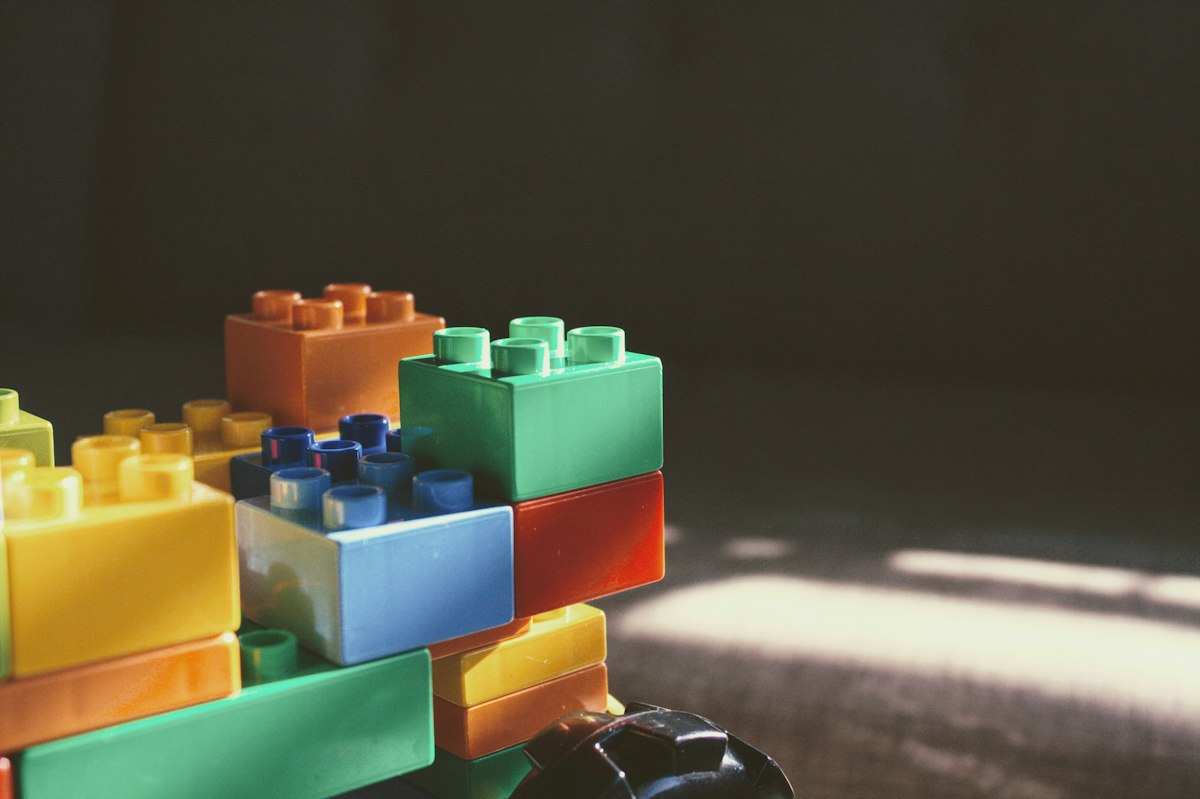
1. The Speed Tower Challenge
Ages 4+Set a two-minute timer. Everyone builds the tallest free-standing tower they can before the buzzer. When time is up, measure with a ruler — or a spaghetti box, we don't judge. Towers that topple don't count, which teaches kids that speed without stability wins nothing. Play three rounds and let the winner pick tomorrow night's game.
2. Mystery Shape Copy
Ages 5+One player builds a small shape behind a cereal box. They describe it out loud — "two triangles on top of one square, one window in the middle" — while everyone else builds from words alone. When the reveal comes, the closest copy wins. It sounds simple, but listening carefully and describing shapes clearly is surprisingly hard, which is exactly the point.
3. Story Chain Build
Ages 5+Each player adds one tile to a shared structure and one sentence to a shared story: "Once there was a dragon who lived in this cave..." No planning allowed. Ten tiles later you'll have a lopsided castle and a plot twist nobody saw coming. The rule that kills it: every new tile has to connect to the story, so the build stays as unpredictable as the tale.
4. The Symmetry Mirror
Ages 6+Lay a ruler on the table as the mirror line. One player builds any design on the left side; their partner must build the exact mirror image on the right. It's calm, quiet, and sneakily mathematical — you're teaching reflections without a single worksheet. Make it harder by adding a color rule: the mirror image must also swap two colors.
5. Bridge Engineering Contest
Ages 7+Place two stacks of books exactly 20 centimeters apart. Each team builds a bridge that spans the gap and holds a small toy car in the middle for ten seconds. Teams get identical tile counts. This is a real engineering problem disguised as a game, and watching a bridge fail is half the fun — then rebuild it stronger.
6. Tile Tetris
Ages 6+Draw a large rectangle on paper — say 30 by 24 centimeters. Players take turns placing tiles flat inside the boundary, puzzle-style, and the last player who can still make a legal move wins. Every gap you leave becomes your opponent's opportunity. It plays like a slow, satisfying strategy game and works just as well with two players as with five.
7. Twenty-Questions Structure
Ages 8+The builder secretly decides on a structure — the Eiffel Tower, a rocket, a shoe — and starts building in silence. Everyone else gets twenty yes-or-no questions to guess it before the build is finished. The builder can't speak except to answer. It's part deduction game, part sculpture reveal, and the suspense of a slow build is unbeatable.
Why Do Magnetic Tiles Work So Well for Mixed Ages?
Because the magnet does the fine-motor work, a toddler and a ten-year-old can genuinely play the same game at their own level. A 2020 study published in Frontiers in Psychology found that block-building complexity in preschoolers is directly associated with spatial skills, and that children who build complex structures tend to achieve better math results later in school (Frontiers in Psychology, Spatial Skills Associated With Block-Building Complexity in Preschoolers, 2020). Strong magnetic connections also mean structures hold firm while building and release easily afterward — so a failed tower is a five-second reset, not a five-minute tantrum.
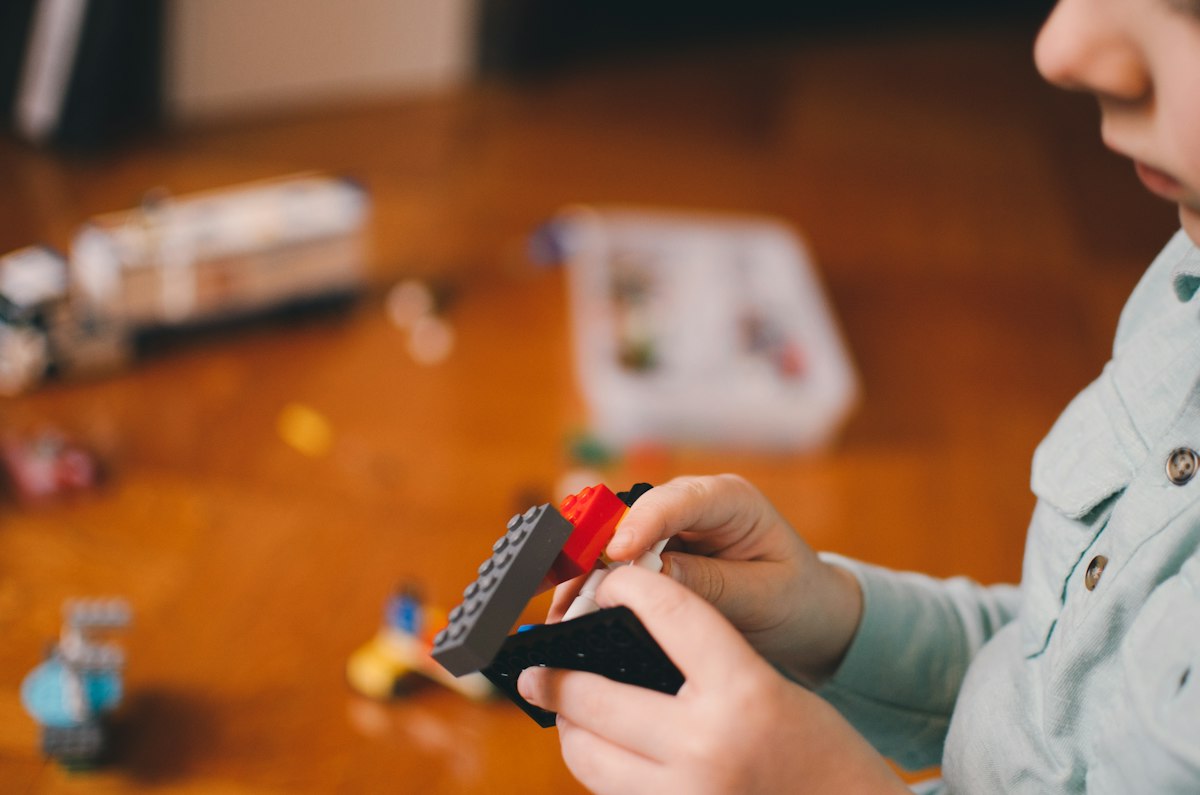
Open-ended design matters too: there is no single correct way to build, so nobody loses to a rulebook. The American Academy of Child & Adolescent Psychiatry recommends limiting non-educational screen time to about one hour per weekday for children ages 2–5 (AACAP, Screen Time and Children). A tile challenge night makes that hour easier to protect — the games are simply more interesting than another episode. If you're planning the whole evening, our earlier guide on why magnetic tiles beat screens covers the setup in more depth.
Ready to play tonight?
StoreClaw Magnetic Tile Puzzle for Family Game Night — $35.95
Strong magnetic connections, open-ended play, and every challenge in this guide ready to run.
Get the Magnetic Tile SetFrequently Asked Questions
What ages are these magnetic tile games best for?
The games range from ages 4 to 8+, but one set spans the whole family. Research on preschoolers found block-building complexity tracks with spatial-skill development (Frontiers in Psychology, 2020), while games like Bridge Engineering keep pre-teens genuinely challenged.
How do I keep the games fair when ages differ?
Give each player a role matched to their strength. Since children ages 2–4 average 2 hours 8 minutes of daily media use (AAP, 2024), even twenty minutes of mixed-age tile play is a win. Let the youngest be the judge or the describer; older kids take the harder builds.
How long does a magnetic tile game night take?
Each challenge runs 10–20 minutes, so a full night of three or four games fits inside an hour. That aligns neatly with the AACAP guideline of about one hour of non-educational weekday screen time for ages 2–5, replaced entirely by hands-on play.
How many tiles do we need for the challenges?
All seven games work with a single standard set. Games like Tile Tetris and Bridge Engineering split tiles between players, while Speed Tower and Story Chain let everyone draw from the shared pile — no expansion packs required.
Wrap Up Your Game Night
One box of magnetic tiles, seven challenges, zero screen time. Start with the Speed Tower for laughs, work up to the Bridge Contest for real engineering, and end with Twenty-Questions Structure for a dramatic finish. Pick tonight's game, clear the kitchen table, and let the best builder win. And if you want more ideas after game seven, our guide to screen-free family fun with magnetic tiles has you covered.
1. American Academy of Pediatrics — "Average Amount of Screen Time for Children and Young Adults", retrieved 2026-10-16, https://www.aap.org/en/patient-care/media-and-children/
2. American Academy of Child & Adolescent Psychiatry — "Screen Time and Children", retrieved 2026-10-16, https://aacap.org/AACAP/AACAP/Families_and_Youth/Facts_for_Families/
3. Frontiers in Psychology — "Spatial Skills Associated With Block-Building Complexity in Preschoolers", retrieved 2026-10-16, https://pmc.ncbi.nlm.nih.gov/articles/PMC7649809/